Honestly, when you're picking a precision metal process in 2026, there's no single 'best' option that works for everyone. It's more about finding the right fit for your specific part – you know, considering things like production volume, tolerances, the material you're working with, and your timeline. CNC machining is great if you have tight tolerances or only need a small batch. On the other hand, if you're doing repeat orders, stamping might be the way to go. And for things like formed enclosures or brackets, Sheet Metal fabrication really shines. Look, casting and metal additive manufacturing each bring their own strengths—and their own limits, too.
Deming said it best: “Quality comes not from inspection, but from improvement of the production process.” That’s worth keeping in mind when you’re comparing suppliers. Sure, they can hand you a polished quote, but that doesn’t prove their process is stable. Ask the real questions: How do they control dimensions? How do they document material? What about surface finish—how do they verify it? And if the spec calls for it, request a sample part or an inspection report.
At the end of the day, a pretty sales pitch isn’t the same as a reliable process.
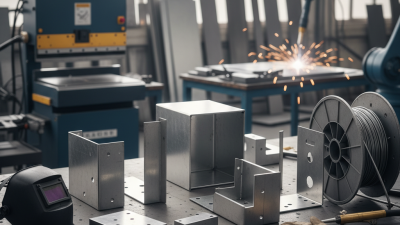
Honestly, the details are what make the call. Take a thin stainless bracket with a few bends—that’s probably a job for fabrication. But a small aluminum part with tight bores? Machining might be the better route. Of course, once you’re talking high volume, the math changes. Tooling, setup, scrap risk, finishing—all of it lands in the final price. And don’t be fooled by a low unit cost; sometimes it just means you’ll be waiting a long time.
Honestly, there's no magic shortcut here. And you'd be surprised how often buyers over-specify tolerances—then end up paying for precision the part never really needed. That alone is worth a second look. In this guide, we'll walk through common manufacturing processes and the trade-offs you should actually think about before hitting 'request quote.' At the end of the day, the best process isn't the flashiest one. It's the one that meets the drawing, performs reliably, and fits the real order—not some imaginary version of it.
For buyers in 2026, precision Metal Processing means choosing how a part will be cut, formed, machined, and inspected—not simply requesting a low quote. Laser cutting suits flat profiles and fast revisions; CNC machining can hold complex features, while stamping becomes economical at higher volumes. The right choice depends on material, tolerances, finish, annual quantity, and delivery needs. The World Steel Association’s October 2024 Short Range Outlook projected global steel demand would rise 1.2% in 2025, to 1.77 billion tonnes. That broad market figure is not a forecast for precision parts, but it underlines why material availability and price assumptions belong in the buying conversation.
Tip: Send a dimensioned drawing, material grade, tolerance requirements, surface-finish expectations, and estimated order volume. Ask suppliers to identify critical dimensions and explain their inspection method. A sample part can reveal burrs, distortion, or fit problems that a quote cannot.
Compare quotes on more than unit price. Check setup costs, tooling ownership, inspection records, packaging, and capacity for repeat orders. Ask what happens if a feature falls outside tolerance, and request clear evidence of measurement. Not every tight tolerance is necessary. I’ve seen buyers specify one by habit, then pay for extra machining and inspection without improving how the part works. Keep the requirements tied to the assembly and operating conditions.
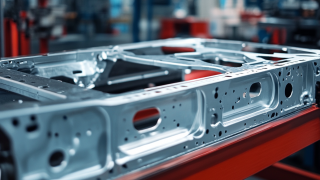
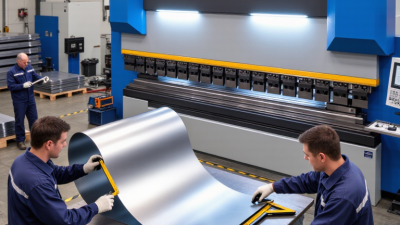
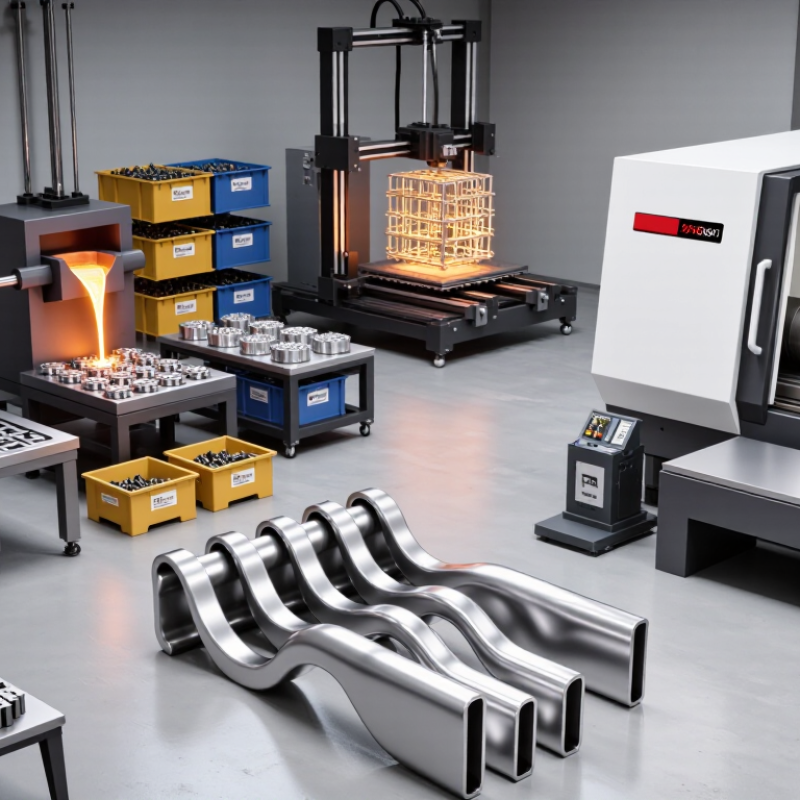
Metal parts can be made by several distinct processes, and each suits a different geometry, volume, and tolerance. CNC machining removes material with cutting tools, making it useful for precise housings, shafts, and prototypes. Sheet metal fabrication cuts and bends flat stock into brackets, panels, and enclosures. It leaves crisp edges, but bends need room.
Casting shapes molten metal in a mold, which can produce complex forms at scale. Forging compresses heated or cold metal, often creating strong parts such as pins and connecting components. Stamping presses sheet into repeated shapes; welding joins separate pieces. Additive manufacturing builds parts layer by layer, supporting intricate internal channels. Small details matter.
The Wohlers Report 2024 estimated that the global additive manufacturing industry reached $20.035 billion in 2023, an 11.1% increase from 2022. That figure includes products and services, not just metal parts, so it should not be read as metal-printing sales alone. For buyers, compare material, annual quantity, surface finish, and inspection needs before choosing a process. A machined prototype may be practical, while a high-volume sheet-metal part may favor stamping. The first quote is not always the best comparison: tooling, finishing, and scrap can change the real cost.
Material sets the starting point for an OEM Precision Metal Process. Aluminum cuts quickly and keeps parts light; stainless steel often suits corrosion exposure, while titanium can raise machining time and cost.
Geometry changes the route. A flat bracket may suit laser cutting and bending, but a deep pocket or angled bore often favors CNC machining. Thin walls need careful fixturing. Geometry matters.
Tolerance should follow function, not habit. A mounting face may need tight control; a hidden cover usually does not. ISO 286-1 provides standardized tolerance grades and fits, but the drawing still needs to specify critical features clearly. A useful shop-floor check is to ask how each datum will be measured. One overlooked tolerance can create a stack-up problem.
Wohlers Report 2024 estimated the additive manufacturing industry reached $21.9 billion in 2023, up 11.1% year over year. That growth signals more process options, not automatic savings. Additive can help with complex, low-volume shapes, yet finishing and inspection may add steps. Not automatically.
Before choosing, compare material availability, part geometry, required tolerance, batch size, and the cost of inspection. A clean CAD model can still mislead; I would recheck the drawing against the actual mating parts.
Choosing an ODM Precision Metal Process depends less on a single unit price than on the full production plan. CNC machining suits complex parts and modest volumes, but machine time and material removal can raise costs. Sheet metal fabrication often offers a practical balance for enclosures and brackets. A laser-cut panel can move quickly from drawing to prototype, though bends and finishing still add time.
Tooling changes the calculation. Stamping usually requires a larger upfront investment, so it becomes more economical when orders are repeatable and volumes are high. Die casting can also support larger runs, but tooling design and sampling may extend the first delivery. For urgent, low-volume needs, machining or laser cutting may reach the shop floor sooner.
Not always.
Ask suppliers to quote the same material, tolerances, finish, and annual quantity. Otherwise, comparisons can be misleading. Also check whether lead time includes inspection, surface treatment, and packaging; a quoted machining date may not mean finished parts are ready to ship. A spreadsheet can miss that detail. I have seen buyers focus on piece price, then revise the plan when setup fees or finishing stages appear. The better choice is the process whose total cost and schedule remain workable as demand changes.
Which processes fit common parts and industries depends on geometry, volume, material, and tolerance. CNC machining suits housings, shafts, and fixtures that need precise features or frequent design changes. Sheet-metal cutting and bending work well for enclosures, brackets, and panels. For large production runs of small, repeatable parts, stamping can reduce cycle time, though tooling costs make late design changes painful. Casting is often practical for complex shapes produced in volume, while metal additive manufacturing can support intricate, lower-volume components.
The Wohlers Report 2024 estimated that the additive manufacturing industry reached US$21.9 billion in 2023, up 11.1% from 2022. That growth shows wider adoption, not that printing is the best choice for every metal part.
The International Federation of Robotics reported 541,302 industrial robot installations in 2023, reflecting the scale of automated manufacturing across sectors. In automotive and electronics, repeatability may favor stamping, machining, or casting; aerospace and medical components may justify machining or additive methods when geometry and material requirements demand them.
Custom Precision Metal Process selection should still be checked against real tolerances, finish, and annual volume. Fit matters. A low-volume prototype can expose weaknesses that a spreadsheet misses.
A reliable precision metal supplier should make its process visible, not just show a polished brochure. Ask for the controlled drawing revision, material certificates, inspection records, and a first-article report tied to your part number. ISO’s 2023 Survey counted more than 1.26 million valid ISO 9001 certificates worldwide. That shows how common certified quality systems are; it does not prove a supplier can hold your specific tolerance. Check whether its inspection plan names the critical features, measurement tools, and acceptance limits.
Look closely at the evidence. For a turned component, request measured results for bore diameter, runout, and surface finish, not a generic “pass” sheet. Confirm gauges are calibrated and that the report identifies the instrument used. For repeat orders, ask how the supplier tracks process drift and handles nonconforming parts. NIST’s 2023 Manufacturing Extension Partnership impact reporting recorded $15.7 billion in new and retained sales among client manufacturers, reflecting the value of operational improvement—not a guarantee of any supplier’s quality. A certificate alone can feel reassuring. It can also hide gaps.
Compare Precision Metal Process Quotes on equal terms: material grade, tolerances, finish, inspection scope, tooling, and lead time should match. Request a small production run before committing to volume, then compare its measurements with your own. Be cautious if results arrive without units, dates, or part identification. I would still question a perfect report; real processes vary, and the supplier should explain how it responds.
Match the method to material, geometry, tolerance, finish, order size, and delivery needs. Laser cutting suits flat profiles and quick revisions. CNC machining handles precise, complex features. Stamping may reduce costs at higher volumes.
Provide a dimensioned drawing, material grade, tolerances, surface finish, and estimated quantity. Mark critical dimensions. Include assembly details when possible. A sample part can expose burrs or fit problems.
Setup, tooling, inspection, packaging, and repeat-order capacity affect the real cost. Ask who owns the tooling and what happens when a feature misses tolerance. Cheap can get complicated.
CNC machining can be practical for prototypes and complex features. Stamping may suit repeated sheet-metal parts at higher volumes. Compare tooling, finishing, and scrap before deciding.
Request the controlled drawing revision, material certificates, inspection records, and a first-article report linked to your part number. Confirm the report lists units, dates, and measured results.
Ask for an inspection plan naming critical features, tools, and acceptance limits. For a turned part, review bore diameter, runout, and surface-finish measurements. A certificate alone is not proof.
Ask how the supplier tracks process changes and handles nonconforming parts. Check gauge calibration and request a small production run. Compare its measurements with your own.
No. Tie each tolerance to the part’s fit and operating conditions. Unneeded precision can add machining and inspection costs without improving performance. I might still question a perfect report; real processes vary.
Choosing the right Precision Metal Process in 2026 means matching how a part will be used with the capabilities, costs, and production needs of each method. Buyers can compare options such as machining, stamping, casting, and metal forming by considering the material, part geometry, required tolerances, surface finish, and design complexity. No single process is best for every part: a method suited to intricate, low-volume components may not be the most efficient choice for simple parts made in large quantities.
Cost and lead time should be weighed alongside production volume, setup requirements, and finishing needs. Buyers can narrow their choices by looking at the part types and industries each process commonly serves, then evaluating suppliers for relevant experience, process controls, inspection practices, and clear quality documentation. A well-informed decision balances performance and manufacturability with budget and schedule, while verifying that the supplier can consistently meet the specified requirements.