Leave Your Message
0%

EV charging used to feel like a niche service. These days? It's essential infrastructure. The International Energy Agency’s Global EV Outlook 2025 says global electric car sales passed 17 million in 2024. That means more than one in five new cars sold was electric. All that growth puts real pressure on charging equipment—especially on the protective housing around it.

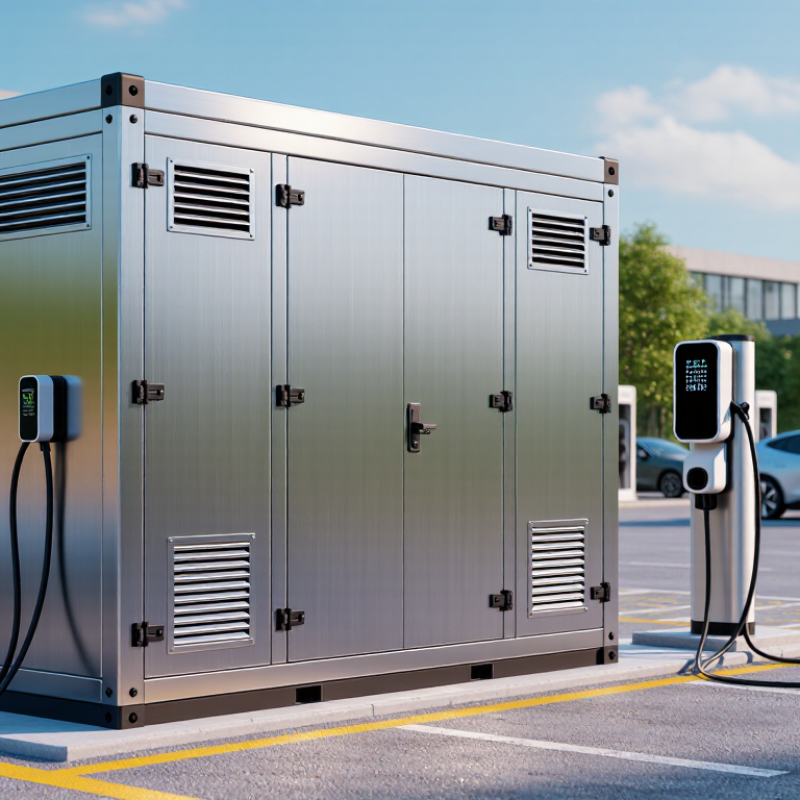
An Ev Charger Metal Enclosurehas to shield electrical components from rain, dust, impact, heat, and the wear and tear of repeated maintenance. It also needs to handle cable routing sensibly, allow secure access, ventilate efficiently, and mount stably. It isn't just a steel box. It affects charger safety, service life, how fast installation goes, and whether users trust the thing. Standards like IEC 60529, IEC 62262, and UL 50E are helpful reference points for ingress protection, impact resistance, and enclosure construction. Still, compliance claims shouldn't be taken at face value—check test records, material certificates, and independent lab evidence.

Small details really do matter. A door that seals poorly can leave terminals exposed after one rough winter. Thin panels might vibrate next to a busy roadway. Pick the wrong coating, and you can end up with corrosion around fasteners. No enclosure is perfect. We might also underestimate condensation, vandalism, or how hard it is for a technician to get access during emergency repairs. That's why reliable manufacturers look at local climate, charger power, installation environment, and expected service cycles before picking materials. The guide below walks through how to compare enclosure metals, protection ratings, thermal design, customization options, and supplier credibility in 2026. It's about measurable performance, not pretty claims. And that distinction matters.
How to Choose an EV Charger Metal Enclosure in 2026?

Define Charger Load and Heat Output: 7–22 kW AC or 50–350 kW DC

Choosing an EV charger Metal Enclosure starts withpower, not appearance. The IEA’s Global EV Outlook 2025 reports more than 17 million electric cars sold in 2024. That growth makes duty-cycle assumptions less theoretical. For AC chargers rated 7–22 kW, estimate conversion losses before selecting steel thickness or ventilation. At 95% efficiency, a 22 kW charger creates about 1.1 kW of heat.That is a small heater inside a sealed cabinet.

For DC charging, the thermal problem changes sharply. The U.S. Department of Energy’s Alternative Fuels Data Center identifies DC fast charging at 50 kW and above, with modern systems reaching 350 kW. At 95% efficiency, a 350 kW cabinet releases approximately 17.5 kW of heat. At 97%, it still releases 10.5 kW. These figures exclude cable and auxiliary losses. Select the enclosure using worst-case ambient temperature, continuous load, solar gain, and blocked airflow. A 50°C installation site is not unusual.

Use coated steel or aluminum according to impact resistance, weight, and heat-transfer needs. Specify a gasketed door, filtered intake, drainage, and service clearance. IP protection follows IEC 60529, while IEC 61851 addresses conductive charging systems. IP rating alone does not prove thermal performance. A neat spreadsheet can still mislead. Test at full load. Record internal hot spots with thermocouples. This is imperfect, but safer.

Select Steel or Aluminum by Strength, Weight, and Corrosion Exposure

Choosing an OEM Ev Charger Metal Enclosure starts with the installation environment, not appearance. Steel provides higher stiffness and impact resistance, making it suitable for parking garages, service yards, and exposed equipment zones. Aluminum weighs about one-third as much as steel, according to U.S. Department of Energy vehicle-materials data. That difference can simplify wall mounting and reduce handling strain during installation. It can also reduce structural load.

Corrosion changes the decision. The NACE IMPACT study estimated global corrosion costs at about 3.4% of worldwide gross domestic product, showing why material selection deserves engineering attention. In coastal areas, salt spray can attack untreated steel around seams, fasteners, and cable openings. Galvanized or coated steel may work well, but damaged coatings need inspection. Aluminum naturally forms an oxide layer and usually performs better in humid or marine exposure, although galvanic corrosion can occur when incompatible metals touch. Use suitable isolating washers and fasteners. Small details matter.

Strength is not only about tensile values. Door deflection, hinge loads, vibration, and vandal resistance also influence performance. NEMA 250 and IEC 60529 help define enclosure protection against impact, water, and ingress, but they do not replace site testing. I have seen lightweight housings selected too quickly, then reinforced later. That mistake costs more. Steel suits severe mechanical abuse; aluminum suits weight-sensitive or corrosion-prone locations. The right choice still depends on coating quality, wall thickness, drainage, and maintenance access.

How to Choose an EV Charger Metal Enclosure in 2026? - Select Steel or Aluminum by Strength, Weight, and Corrosion Exposure

Selection Criterion Galvanized or Powder-Coated Carbon Steel 304 Stainless Steel 5052-H32 Aluminum Practical EV Charger Decision
Typical density Approximately 7,850 kg/m³ Approximately 8,000 kg/m³ Approximately 2,680 kg/m³ Aluminum is about one-third the density of steel, which can reduce enclosure mass substantially.
Relative weight at equal volume 100% reference About 102% About 34% Choose aluminum when low shipping weight, wall loading, or field handling is a priority.
Typical yield strength Approximately 230–275 MPa for common mild structural sheet grades Approximately 215 MPa in annealed 304 sheet Approximately 170–195 MPa for 5052-H32 sheet Steel generally provides higher stiffness and dent resistance; aluminum may require formed ribs, returns, or thicker panels.
Elastic modulus Approximately 200 GPa Approximately 193 GPa Approximately 70 GPa For similarly shaped panels, steel deflects less under the same load; aluminum designs should account for panel flexing.
Thermal conductivity Approximately 45–60 W/m·K Approximately 14–16 W/m·K Approximately 138 W/m·K Aluminum transfers heat much faster and can help spread heat from internal power electronics, although ventilation or thermal design is still required.
Outdoor corrosion resistance Moderate with intact zinc, paint, or powder coating; exposed scratches can rust. Very good in many urban and industrial environments; prolonged chloride exposure can cause pitting. Good natural oxide protection; salt, alkaline deposits, and dissimilar-metal contact require attention. For coastal or de-icing-salt locations, stainless steel or properly finished aluminum is usually preferable to unprotected carbon steel.
Recommended exposure profile Indoor, sheltered outdoor, or controlled outdoor sites with a maintained coating system Wet industrial areas, urban streets, and demanding outdoor installations Outdoor sites where low weight and heat transfer are important, including many coastal applications with suitable detailing Match the material to actual humidity, salt, pollutants, UV exposure, and maintenance access—not only to nominal outdoor use.
Galvanic corrosion risk Can corrode rapidly when directly coupled to aluminum or stainless steel in a wet, conductive environment. Can accelerate corrosion of less noble metals when moisture and electrical contact are present. Requires isolation from copper, carbon steel, and some stainless-steel hardware in wet service. Use compatible fasteners, insulating washers, sealants, and drainage details when mixing metals.
Impact and vandal resistance High when adequately thick and reinforced; coating damage must be repaired. High and well suited to demanding public installations. Good when properly formed, but softer and more vulnerable to dents than steel. Select steel for high-impact areas unless an aluminum enclosure is reinforced or protected by a robust mounting design.
Fabrication considerations Easy to laser-cut, bend, weld, and finish; post-fabrication corrosion protection is important. Good formability and weldability; heat tint and contamination should be controlled. Excellent formability and low mass; welding can reduce local strength in heat-affected zones. Confirm bend radii, joint design, grounding method, and finish compatibility before production.
Grounding and bonding Reliable conductive bonding is straightforward, but painted surfaces need dedicated bonding points. Conductive and durable; bonding points should be protected against contamination and loosened hardware. Conductive, but oxide films and mixed-metal joints require engineered bonding provisions. Design protective-earth continuity separately from enclosure material selection and verify it during testing.
Best overall use case Cost-sensitive, rugged installations with manageable coating maintenance High-corrosion, high-contact, or premium outdoor installations Lightweight wall-mounted or transport-sensitive installations requiring efficient heat spreading Choose steel for maximum rigidity and impact resistance; choose aluminum for minimum weight and high thermal conductivity; choose stainless steel for demanding corrosion exposure.
Engineering note: Values are typical room-temperature properties for commonly used sheet materials and may vary by grade, temper, thickness, coating, and manufacturing process. Final enclosure selection should also verify required ingress protection, electrical safety, grounding, temperature rise, UV resistance, fire performance, and applicable local installation requirements.

Specify IEC 60529 IP54–IP66 and IEC 62262 IK08–IK10 Protection

The IEA’s Global EV Outlook 2024 recorded nearly 14 million electric car sales worldwide in 2023. More chargers now face rain, dust, road grit, and accidental impact. An EV charger metal enclosure must therefore be specified by tested protection, not appearance.

IEC 60529 IP54 offers limited dust ingress protection and resistance to water splashes. IP66 provides dust-tight protection and withstands powerful water jets. For exposed parking areas, IP65 or IP66 is usually more defensible than IP54. However, the rating applies to the complete assembly. Door seals, cable glands, hinges, and ventilation openings can weaken it. A small gap matters.

IEC 62262 measures mechanical impact resistance. IK08 withstands 5 joules, while IK10 withstands 20 joules. A tool strike or vehicle-door impact can expose weak corners quickly. In practical inspections, sharp edges and poorly supported panels often cause trouble before the steel does. That detail is easy to miss.

An ODM Ev Charger Metal Enclosure should document IP and IK test conditions, coating performance, grounding continuity, and thermal behavior. NREL research on charging infrastructure also highlights the importance of reliable operation across varied outdoor environments. Higher protection is not automatically better; sealed cabinets may trap heat. Designers should question whether an IP66 and IK10 target suits the charger’s cooling method, maintenance access, and local weather. A perfect rating on paper can still fail in the field.

Verify UL 50E, NEMA 250, and IEC 61851 Compliance Requirements

Choosing an EV charger metal enclosure in 2026 requires more than checking steel thickness. Verify UL 50E requirements for enclosure construction, corrosion resistance, drainage, and environmental protection. Confirm the intended NEMA 250 type matches the installation site. Outdoor chargers may face rain, dust, ice, oil, or accidental hose spray. A workshop evaluation should include door fit, gasket compression, hinge strength, grounding points, and cable entry protection.

IEC 61851 focuses on conductive EV charging system safety, control functions, and communication. It does not replace enclosure requirements. The enclosure must support safe charging operation, protective bonding, ventilation, and access control. Check whether internal temperature affects charging components. A metal box can look strong but still trap heat. That mistake is easy to overlook. Ask the test laboratory or compliance engineer to confirm the applicable edition and test scope.

Tips: Request complete test reports, not only certificates. Compare the enclosure’s NEMA rating with actual site conditions. Inspect sample units for sharp edges, coating damage, and water paths. Leave space for wiring and maintenance. Recheck assumptions when the charger changes power, location, or cable design. Small design changes can affect compliance.

Design Ventilation and EMC Shielding for High-Power Charging Systems

High-power EV charging turns a metal enclosure into a thermal and EMC component, not just a protective box. The IEA’s Global EV Outlook 2024 reports more than four million public chargers worldwide at the end of 2023. Public charging capacity also grew by over 40% that year. This expansion increases pressure on compact cabinets, especially in hot parking areas.

Choose powder-coated steel or aluminum after checking heat paths, corrosion exposure, and door strength. Aluminum reduces weight, but steel can offer stronger shielding and impact resistance. Ventilation needs careful separation from rain, dust, and salt. Filtered fans, pressure relief vents, and internal airflow guides can prevent hot spots around contactors and power modules. Yet, airflow alone is not enough. Poorly placed vents may weaken EMC performance. IEC 61000-6-2 and IEC 61000-6-4 provide useful immunity and emissions references, while IEC 61851 supports charging-system design decisions. Real testing remains essential.

Tips: Request Ev Charger Metal Enclosure Quotes with thermal test conditions, IP ratings, material thickness, gasket details, and EMC test evidence. Ask whether the quoted design was tested at full load, not standby power. Keep signal cables away from switching conductors. Use conductive gaskets around removable panels. Leave service clearance near fans and filters. Small omissions become expensive later. A practical review should include condensation, blocked filters, and winter operation. I would not approve a beautiful enclosure before seeing its heat map.

How to Choose an EV Charger Metal Enclosure in 2026?

The chart shows the calculated DC output current at a 400 V bus and the estimated enclosure heat loss when conversion efficiency is assumed to be 95%. As charging power rises, enclosure design must provide stronger thermal management, controlled airflow, adequate creepage and clearance, and continuous EMC shielding.

For ventilated enclosures, use filtered intake and exhaust paths that do not interrupt the conductive shielding boundary. Honeycomb EMC vents, conductive gaskets, bonded panels, and a low-impedance protective-earth connection help reduce radiated emissions while maintaining airflow. The current and heat-loss values are engineering calculations: current = power ÷ 400 V, and heat loss = 5% of rated output power.

Add Tamper Resistance, Cable Management, and ISO 15118 Readiness

Choosing an EV charger metal enclosure in 2026 requires more than checking steel thickness. Field inspections show that weak access panels, exposed fasteners, and loose cables often create avoidable maintenance problems. A reliable enclosure should resist forced entry while allowing authorized technicians to open it quickly. Use concealed hinges, lockable service doors, and reinforced mounting points. Tamper resistance must not block safe servicing.

Cable management deserves equal attention. A charging cable dragging across concrete can collect dirt, develop sharp bends, or become a trip hazard. Look for a strong holster, a protected cable channel, and strain relief near the connector. Drainage paths and smooth internal edges also reduce water retention and cable damage. I have seen attractive housings fail because installers had nowhere to store a heavy cable.

ISO 15118 readiness changes the internal layout. Reserve space for communication hardware, power-line communication components, shielding, and future service access. Keep high-voltage wiring separated from signal cables, and plan grounding points before fabrication. A Custom Ev Charger Metal Enclosure should support controlled upgrades without requiring complete replacement. Ask the manufacturer for material specifications, ingress testing, corrosion data, and documented assembly checks. Do not accept “ready” as a vague label. Verify it.

Small oversights remain possible. A lock can corrode. A cable hook can loosen. Review the enclosure after installation, seasonal exposure, and repeated charging cycles. A qualified electrical engineer should confirm the final design for its intended environment.

How Custom Metal Chassis Monitor Machines Enhance Quality, Durability, and Production Efficiency

Custom metal chassis monitor machines are designed to deliver stable performance in demanding industrial and commercial environments. A precisely fabricated chassis protects internal components from impact, dust, vibration, and heat, while providing a secure structure for displays, control systems, and other electronic modules. Materials such as SGCC, aluminum, and stainless steel can be selected according to the required strength, weight, corrosion resistance, and appearance. This flexibility helps manufacturers create monitor machines that meet specific operating conditions and maintain consistent quality over an extended service life.

Production efficiency begins with accurate engineering and controlled processing. Precision laser cutting, professional bending, welding, surface treatment, and complete assembly can reduce dimensional errors and simplify installation. An in-house painting line also supports flexible order quantities, including small batches, without compromising finish quality or delivery coordination. Customized services are available according to customer designs and 3D drawings, allowing details such as mounting points, ventilation openings, cable routes, access panels, and protective coatings to be optimized before production. With extensive sheet metal fabrication experience, each chassis can be developed for smooth assembly, reliable maintenance, and efficient large-scale manufacturing while preserving a clean and professional appearance.

FAQS

How much heat can an EV charger enclosure produce?

A 22 kW AC charger may release about 1.1 kW of heat at 95% efficiency. That is a small heater inside a sealed cabinet.

Why does DC charging require more thermal planning?

A 350 kW DC charger can release approximately 17.5 kW of heat at 95% efficiency. Cable and auxiliary losses add more heat. Heat still matters.

What environmental conditions should enclosure design consider?

Use the highest expected ambient temperature, continuous load, sunlight, and blocked airflow. A 50°C installation site is possible. Do not design only for mild weather.

Which enclosure material is more suitable, steel or aluminum?

Steel can provide stronger impact resistance and electromagnetic shielding. Aluminum reduces weight and may improve heat transfer. The better choice depends on corrosion, strength, and thermal paths.

Does an IP rating prove good thermal performance?

No. An ingress rating mainly describes protection from dust and water. It does not prove safe temperatures during full-load operation. A neat spreadsheet can still mislead.

How should ventilation be designed for a charging cabinet?

Use filtered fans, pressure relief vents, drainage, and internal airflow guides. Keep vents away from direct rain, dust, and salt. Poor vent placement may weaken electromagnetic shielding.

What testing should be requested before approving an enclosure?

Request full-load thermal testing with recorded internal hot spots. Thermocouples can reveal heat near contactors and power modules. Test blocked filters, condensation, and winter operation too.

How can the enclosure resist tampering while remaining serviceable?

Use concealed hinges, lockable service doors, reinforced mounting points, and protected fasteners. Authorized technicians still need quick and safe access. Security should not block maintenance.

What cable-management details should the enclosure include?

Provide a strong holster, protected cable channel, strain relief, and smooth internal edges. Drainage paths help prevent water retention. A loose cable hook can fail.

How should the enclosure support future communication upgrades?

Reserve space for communication hardware, shielding, grounding points, and service access. Separate high-voltage wiring from signal cables. Do not trust vague claims of readiness. Verify it.

Conclusion

Choosing the right Ev Charger Metal Enclosure in 2026 begins with matching the enclosure to the charger’s power and heat output. AC chargers typically range from 7–22 kW, while DC systems may reach 50–350 kW and require stronger thermal management. Steel offers high strength and impact resistance, whereas aluminum reduces weight and provides useful corrosion resistance in exposed environments. The enclosure should also meet suitable IP54–IP66 ingress protection and IK08–IK10 impact protection levels according to installation conditions.

Compliance and system integration are equally important. Verify applicable UL 50E, NEMA 250, IEC 60529, IEC 62262, and IEC 61851 requirements before production. High-power designs should include effective ventilation or cooling, while maintaining EMC shielding to reduce electrical interference. Practical features such as tamper resistance, organized cable management, safe maintenance access, and readiness for ISO 15118 communication can improve reliability and user experience. A well-designed enclosure protects internal components, supports long service life, and adapts to changing charging demands.
Clara

Clara

Clara is a dedicated marketing professional at Dongguan Changjian Electronics Co., Ltd. (New Website 2), where she leverages her extensive knowledge of the company's products to connect with clients and stakeholders effectively. With a strong passion for electronics and deep understanding of market......
Previous Why Choose a Metal Chassis for Your Product?