Picking a reliable supplier for Sheet Metal Fabricationisn’t just about comparing prices. Sometimes, a small thing like a weak bend, a rough edge, or a tardy delivery can throw off your whole production schedule—trust me, I’ve been there. The market’s huge, though—Fortune Business Insights estimates the global Sheet Metal industry hit around USD 278.8 billion in 2023, and they’re forecasting it’ll grow to about USD 397.9 billion by 2032. No question, it’s a highly competitive space. But just because the numbers are big doesn’t mean every supplier out there is reliable or worth trusting blindly.
The devil’s in the details, though. You gotta ask: can they match the tolerances shown on your drawings? Find out how they verify things like hole placements, bend angles, material thickness, and the finish. Don’t settle for just shiny photos of finished parts—ask for inspection reports too. A good shop should walk you through their entire process, from where they source their materials to how they do final checks. And if they spot potential design issues early on—that’s a big plus. Honestly, those conversations can tell you a lot.
Also, keep in mind reports from groups like the Fabricators & Manufacturers Association, International. Their 2024 “State of the Industry” highlights ongoing challenges like labor shortages and rising costs, which can sometimes slow down lead times or impact quality. But, trends aside, the real deal still comes down to how you verify things yourself. Check their equipment capacity, quality protocols, how well they communicate, and whether they give realistic delivery deadlines. It’s a good idea to ask for references on projects similar to yours—materials, tolerances, that kind of thing. Then, compare what they tell you against what you really need. Sometimes, a supplier might look awesome on paper but miss a tiny, yet crucial detail. So, don’t hesitate to reconsider your first pick if something feels off—that’s all part of the process.
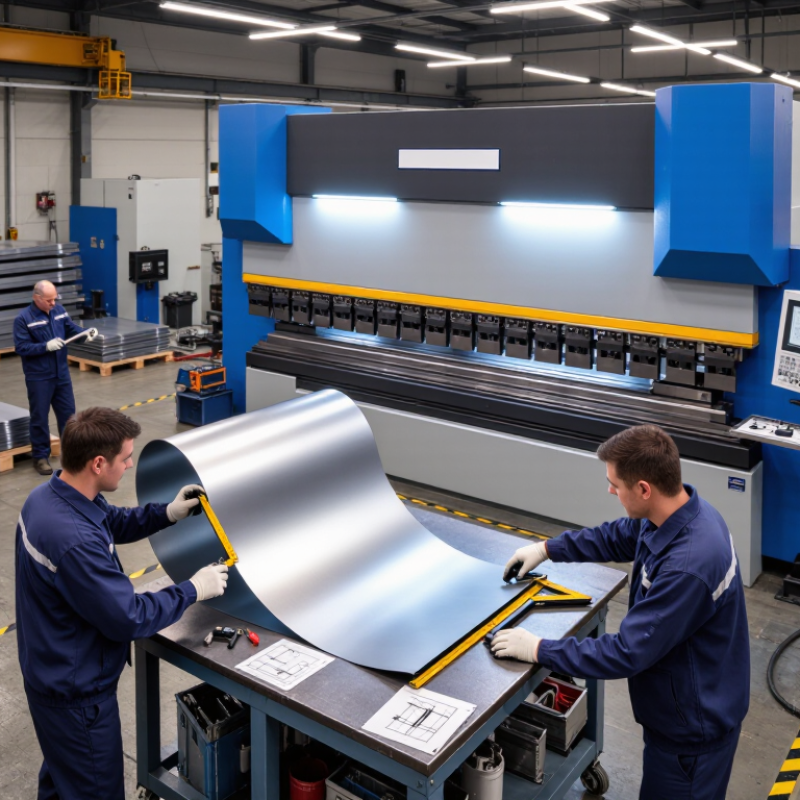
Before comparing suppliers, turn the part into a clear manufacturing brief. State the material grade, thickness, annual quantity, and expected order size. Include a dimensioned drawing with critical tolerances, bend angles, hole locations, finish, and inspection requirements. For example, specify whether a visible panel needs a brushed finish and which face must remain scratch-free. Precision Sheet Metal Fabrication depends on matching the design to the process; tight tolerances may require extra setup or inspection. I have seen vague finish notes cause avoidable rework. The drawing looked complete, but “smooth” meant different things to different people.
Ask potential suppliers to review manufacturability, tooling, production capacity, and quality records against your actual specifications. Deloitte and The Manufacturing Institute’s 2024 workforce study estimates that 1.9 million of 3.8 million manufacturing jobs needed by 2033 could go unfilled. This is not a sheet-metal capacity forecast, but it highlights why verifying a supplier’s skilled workforce and process controls matters. Request sample inspection reports and clarify how deviations are documented. Don’t assume.
Tips: Send a representative CAD file and drawing, then ask for a written review of risky features. Confirm packaging and delivery expectations too. One detail is easy to miss: specify whether dimensions apply before or after coating.
A reliable supplier must match your part’s real manufacturing requirements, not merely list “sheet metal” on a website. Check material experience, thickness ranges, laser or punching capacity, press-brake tonnage, welding methods, and finishing options. For Prototype Sheet Metal Fabrication, ask whether the supplier can revise drawings quickly and produce five identical samples. Small details matter, such as burr direction, bend radii, and thread placement.
During supplier audits, I request sample inspection reports, process-control records, and photographs of comparable parts. Confirm available equipment, including calibrated CMMs, gauges, and coating inspection tools. The 2023 ISO Survey reported more than one million ISO 9001 certificates worldwide, but certification alone does not prove practical competence. Review the supplier’s scope, recent audit findings, and corrective-action records. A certificate can be current while the workshop still struggles with thin aluminum.
Industry data also supports checking operational resilience. The 2024 Deloitte Manufacturing Industry Outlook identifies supply-chain disruption and workforce capability as continuing manufacturing concerns. Ask how the supplier handles material shortages, operator absence, and urgent engineering changes. Request evidence, not promises. A useful test is a small pilot order with tight tolerances and a clear delivery date. Compare the first-article report with the drawing, then inspect actual parts under consistent lighting. I once overlooked packaging damage because the components were dimensionally correct. That was a poor evaluation. Reliable capability includes protection, traceability, communication, and honest disclosure when a tolerance is difficult to hold.
When assessing a sheet metal supplier, start with its quality system, not its showroom. Ask how drawings, revisions, and inspection records are controlled. A dependable team should trace each batch from incoming coil to packed parts. Request sample records for material certificates, first-article checks, and final dimensional reports. Missing signatures or vague dates deserve attention. Small gaps often become expensive delays.
Walk through the production area if possible. Observe laser cutters, press brakes, deburring stations, and measuring equipment in use. Machines should have documented maintenance schedules and calibration dates. Look for clean worktables, labeled raw materials, and protected finished surfaces. For Aluminium Sheet Metal Fabrication, confirm that the supplier manages scratches, distortion, and heat-related discoloration. Ask about thickness capacity, bend accuracy, and tolerance control on repeat orders. A modern machine helps, but skilled setup matters more than impressive specifications.
Request a trial order before committing to volume. Compare the drawing with the first parts, including hole position, edge condition, and flatness. Ask who approves nonconforming pieces and how corrective actions are verified. I have seen attractive samples followed by inconsistent production. That experience changed my approach. Do not rely on promises alone. Review evidence, speak with operators, and test communication under a small deadline. A supplier may pass an audit yet struggle with real-world changes. That possibility should remain visible.
A reliable sheet Metal Fabrication supplier should show proven experience, not just attractive photographs. Ask how long they have handled similar materials, tolerances, and production volumes. A supplier experienced with thin stainless steel may not perform well with heavy aluminum assemblies. Request sample drawings, inspection records, and details about past projects. Specific answers matter more than confident promises.
Certifications can support credibility, but they are not automatic proof of quality. Confirm the certificate number, issuing body, scope, and expiration date. ISO 9001 may indicate a structured quality system. It does not guarantee every part will be perfect. Ask how the supplier controls material traceability, welding procedures, measuring equipment, and nonconforming parts. Calibration records should be current. Small details reveal discipline.
References deserve careful attention. Contact two or three recent customers and ask about delivery consistency, communication, rework, and corrective action. Ask whether problems were reported early. That answer can be revealing. A supplier with no reported issues may simply avoid difficult questions. I have seen evaluations focus too heavily on low prices and impressive facilities. That approach can fail. A clean workshop helps, but verified records and honest references offer stronger evidence. If possible, begin with a small trial order and inspect the first articles closely. This creates practical evidence before full production.
Finding a reliable sheet metal fabrication supplier takes more than choosing the lowest number on a quote. Compare each quote line by line: material grade, thickness, tolerances, tooling, finishing, packaging, and freight. A vague “stainless steel” description deserves questions. For Stainless Sheet Metal Fabrication, ask whether the supplier can provide mill certificates and inspection records. Request a sample drawing review before production. Small omissions become expensive changes later.
Lead time should be written as a schedule, not a hopeful promise. Ask for dates for design review, material purchasing, first-article inspection, production, and dispatch. Check whether the estimate assumes readily available sheet stock. A supplier with a slightly longer but realistic timeline may be safer than one promising ten days without capacity evidence. I once treated an attractive delivery date as a fact; it moved twice after material approval. That mistake was avoidable.
Communication reveals operational discipline. Send the same drawing and revision notes to each supplier. Compare how clearly they identify risks, ask technical questions, and confirm assumptions. Ask who owns your project and how quickly urgent changes are handled. A useful reply may include marked-up drawings, inspection checkpoints, and a clear escalation path. Silence is data, too. Still, fast replies do not guarantee good work. Verify them through references, production photos, or a small trial order. Keep records of every agreed tolerance and date. Human error happens, including mine, so written confirmation matters.
A reliable sheet metal fabrication supplier should prove its capability through physical samples. Request parts similar to your design, not decorative showcase pieces. Examine cut edges, hole positions, bend angles, welds, and surface treatment under bright light. Run a caliper across critical dimensions. Feel for sharp burrs. Small defects often reveal weak process control.
Ask how each sample was produced. The supplier should explain material grades, thickness control, tooling, inspection methods, and corrective actions. Compare the sample with its drawing. Check flatness after bending and coating adhesion after handling. One good part proves little. Production drift can appear after several hundred pieces, and I have seen attractive samples hide inconsistent tolerances.
Confirm whether the supplier fits your actual project. Discuss monthly volume, prototype changes, packaging needs, lead times, and inspection records. Request a small trial order with documented acceptance criteria. Review how the team reports defects and responds to unclear drawings. Clear communication matters. A supplier that asks practical questions may be safer than one promising everything.
Do not judge only by price. Compare sample quality, process discipline, delivery evidence, and technical honesty. If the supplier admits a limitation and proposes a workable adjustment, that can build more trust than polished sales language. Keep written records of agreed materials, tolerances, finishes, and revision numbers. Personal experience suggests this step prevents expensive misunderstandings.
Assess samples and confirm supplier fit by scoring the key factors that affect production quality, cost, delivery, and long-term cooperation.
Use a consistent 1–5 scoring scale: 1 means unacceptable and 5 means excellent. Sample quality and process capability should be verified before placing a larger production order.
Custom sheet metal EV charger housings need to protect sensitive equipment while remaining practical for outdoor installation. Made from durable SGCC material, a well-designed enclosure can resist everyday impacts and provide dependable dust- and water-resistant protection in varied environments. A sturdy structure helps the housing withstand exposure to the elements, while carefully planned dimensions and openings allow space for components, cables, ventilation, and maintenance access. Finishes and structural details can also be tailored to suit the installation and intended use.
Precision fabrication is essential to achieving consistent fit and reliable assembly. Processes such as accurate cutting, forming, and joining help produce clean edges, aligned panels, and repeatable dimensions. When selecting a supplier, consider material quality, manufacturing capabilities, inspection practices, and the ability to adapt designs to specific project requirements. An experienced China-based factory offering custom design services can work with buyers to refine drawings, enclosure layouts, and functional details. This combination of durable construction, precise production, and responsive customization supports EV charger housings designed for dependable outdoor service.
Request material certificates, first-article reports, final dimensional checks, and revision-controlled drawings. Missing signatures deserve attention. Each batch should be traceable from incoming material to packed parts.
Observe cutting, bending, deburring, measuring, and finishing areas in use. Look for labeled materials, clean worktables, protected surfaces, and organized records. A polished showroom proves little.
Ask for maintenance schedules and calibration dates for machines and measuring tools. Check bend accuracy, thickness capacity, and tolerance control. Modern equipment helps, but skilled setup matters more.
Compare each sample with its drawing under bright light. Check hole positions, edge conditions, bend angles, welds, flatness, and surface finish. Run a caliper across critical dimensions. Feel for burrs.
A trial order reveals production consistency before larger commitments. Inspect several parts, not only the most attractive piece. One excellent sample can hide later tolerance drift.
Confirm the certificate number, issuing body, scope, and expiration date. A quality certificate supports credibility, but it does not guarantee perfect parts. That distinction matters.
Ask about delivery consistency, communication, rework, defect reporting, and corrective action. Find out whether problems were reported early. Silence is not always proof of success.
Discuss material grades, monthly volume, prototype changes, packaging, lead times, and inspection records. Keep written records of tolerances, finishes, and revision numbers. Clear questions reduce expensive misunderstandings.
Price matters, but compare it with sample quality, process discipline, and delivery evidence. A supplier admitting a limitation may be safer than one promising everything. I may still judge too cautiously, but evidence usually protects better than confidence.
Finding a reliable Sheet Metal Fabrication supplier starts with clearly defining your project requirements, including material type, thickness, dimensions, tolerances, surface finish, quantity, and delivery expectations. With these details in place, focus on suppliers whose capabilities match your needs, such as cutting, bending, welding, forming, and finishing. Review their quality management systems, inspection procedures, production equipment, and ability to maintain consistent results.
A dependable supplier should also demonstrate relevant industry experience, appropriate certifications, and positive customer references. When comparing potential partners, look beyond price by evaluating quotation accuracy, lead times, responsiveness, and communication throughout the project. Request samples or prototypes to assess workmanship, dimensional accuracy, and finish quality before placing a larger order. The best supplier will offer a balanced combination of technical capability, stable quality, transparent communication, reasonable pricing, and dependable delivery, creating a strong fit for both current and future fabrication requirements.