Leave Your Message
0%

So China has become a major sourcing base for precision Metal Chassis used in servers, telecom equipment, industrial controls, and electronic devices. What makes it so attractive? Dense supplier networks, competitive labor costs, mature tooling, and easy access to aluminum, stainless steel, and coated steel processing. But here's the thing: lower pricing alone doesn't prove manufacturing strength.

Grand View Research put the global sheet Metal Fabrication services market at roughly USD 20.3 billion in 2023. The same report sees continued growth through 2030, driven by electronics, automotive, and industrial automation demand. MarketsandMarkets also points to automation, precision forming, and lightweight materials as key trends in metal stamping and fabrication. That helps explain why global buyers keep evaluating Chinese suppliers.

This guide looks at ten China-based manufacturers that serve international purchasing teams. The comparison weighs CNC machining, laser cutting, stamping, bending, welding, surface treatment, quality systems, production capacity, and export experience. Candidate companies may include Foxconn Industrial Internet, BYD Electronics, Victory Giant Technology, and other specialized chassis producers. Capabilities can vary a lot from one factory to the next.

Details really matter. A polished sample can hide inconsistent tolerances, weak packaging, or limited capacity during peak seasons. Buyers should ask for recent inspection records, material certificates, PPAP-style documentation, and production photos. ISO 9001 certification is helpful, sure, but it's not a complete quality guarantee. In practice, supplier communication and process discipline often decide whether a project succeeds.

So I'd treat the ranking as a practical sourcing reference, not a permanent verdict. Metal Chassis requirements change with enclosure size, IP rating, thermal design, and regulatory market. A supplier that's excellent for server racks may struggle with compact medical housings. Careful verification is still necessary.
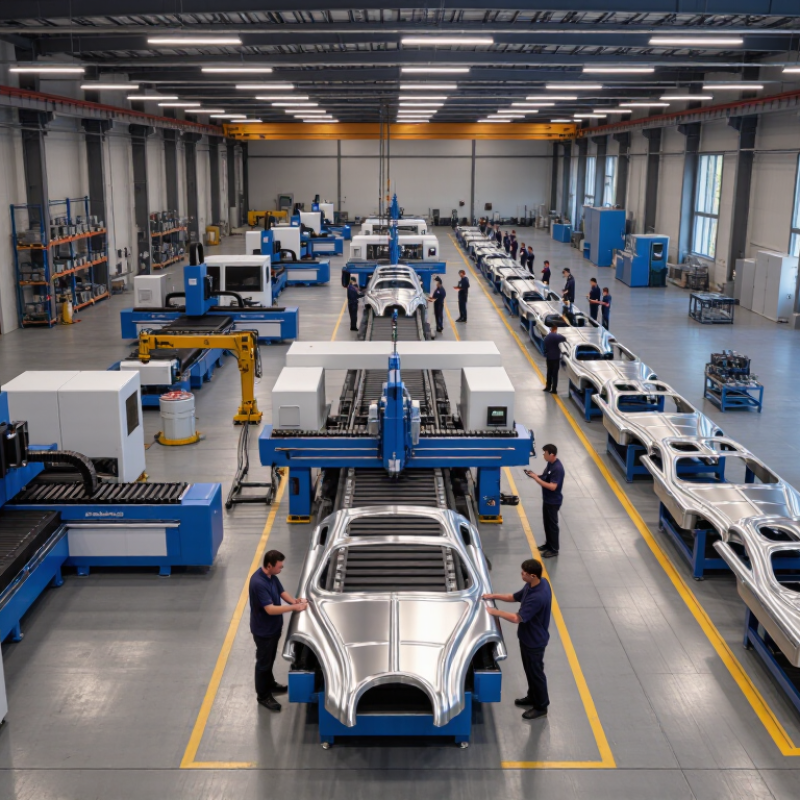
China Top 10 Metal Chassis Manufacturers for Global Buyers

China’s Top 10 Metal Chassis Manufacturers: Scope and Ranking Method

China’s Top 10 Metal Chassis Manufacturers: Scope and Ranking Method

This ranking covers Chinese manufacturers supplying metal chassis to international industrial, networking, medical, and automation buyers. The scope includes steel and aluminum enclosures, welded frames, sheet-metal chassis, and precision-machined housings. It excludes firms focused only on trading or consumer accessories. Practical sourcing experience shows that a polished website proves little. Production evidence matters more.

Each manufacturer receives a weighted score across six areas: material control, machining accuracy, fabrication capacity, quality systems, delivery reliability, and engineering support. Evidence may include factory documentation, sample inspection, tolerance records, export experience, and responses to technical drawings. A strong candidate should explain laser cutting, bending, welding, surface treatment, and final inspection in clear terms. Details count. A 1.5-millimeter steel panel, clean welds, protected corners, and consistent powder coating reveal more than broad claims.

The method also reviews customization ability, communication speed, packaging, and after-sales handling. These factors affect real projects. Cost matters, but it does not dominate the ranking. Low pricing can hide poor flatness, weak threading, or repeated revisions. Not perfect. Public information is uneven, and some production data cannot be independently verified. Scores therefore reflect available evidence, not permanent status. Buyer feedback, recent samples, and site audits should still influence the final decision. A manufacturer ranked highly for large batches may not suit prototypes or urgent replacement parts.

Core Chassis Specifications: 0.8–3.0 mm Steel, IP54–IP66, and NEMA Ratings

Choosing among China’s top 10 metal chassis manufacturers requires more than comparing prices. A reliable Sheet Metal Chassis should match the equipment, environment, and service conditions. Steel thickness usually ranges from 0.8 to 3.0 mm. Thin steel suits indoor control boxes and light instruments. Thicker panels improve rigidity, vibration resistance, and impact protection. However, thicker material can increase weight and bending costs.

Ingress protection must also fit the installation site. IP54 helps block limited dust and water splashes. IP65 offers stronger dust sealing and protection against water jets. IP66 handles more demanding water exposure, but seals, doors, cable glands, and weld quality must work together. NEMA ratings describe enclosure performance differently, so buyers should compare test requirements carefully. A label alone is not enough. Ask for inspection records, material certificates, dimensional reports, and sample testing. Small gaps often appear after repeated door opening.

Tips:

Request a prototype before mass production. Check panel flatness, hinge strength, grounding points, and gasket compression. For outdoor use, inspect coating adhesion after salt spray testing. Do not assume IP66 remains valid after drilling extra holes. That mistake is common. A factory may provide good drawings, yet production results can vary slightly. Define tolerances clearly, especially around mounting rails, cutouts, and removable panels. Experienced suppliers should explain these limits instead of promising everything.

Manufacturer Profiles: Materials, CNC Capacity, Tolerances, and Production Scale

China’s top 10 metal chassis manufacturers differ most in process control, not catalog variety. Strong suppliers usually work with galvanized steel, stainless steel, aluminum, and coated cold-rolled sheet. Material certificates should match each production batch. That detail matters.

Their CNC capacity ranges from compact laser cutters to automated five-axis machining cells. A capable factory can combine laser cutting, turret punching, bending, welding, and surface finishing under one quality system. For a sheet metal charger chassis, engineers should verify bend radius, grounding points, ventilation openings, and cable clearances before tooling begins.

Typical tolerance claims may range from ±0.05 mm for selected CNC features to ±0.20 mm for formed sheet components. These figures need context. Powder coating, welding heat, and long bends can change final dimensions. I have seen drawings pass inspection before finishing, then fail after coating. That weakness deserves honest review.

Production scale also separates these manufacturers. Smaller teams may provide faster engineering feedback and flexible prototype batches. Larger plants can support thousands of units monthly, with fixtures, barcode tracking, and first-article inspection. Buyers should request sample reports, equipment lists, inspection frequency, and defect records. A factory with impressive machines may still lack stable process discipline. Ask for evidence. Sample approval should include measured flatness, hole position, surface finish, and assembly fit. Using real production data is more reliable than relying on a polished capability sheet.

China Top 10 Metal Chassis Manufacturers for Global Buyers - Manufacturer Profiles: Materials, CNC Capacity, Tolerances, and Production Scale
Profile Primary Manufacturing Focus Common Materials Sheet-Metal Capability CNC Machining Capacity Typical Machining Tolerance Maximum Practical Part Size Typical Monthly Production Scale Surface Finishing Options Quality and Inspection Practices
Manufacturer Profile 01 High-volume electronics enclosures and industrial metal chassis Aluminum 5052/6061; stainless steel 304; cold-rolled steel Laser cutting, CNC punching, bending; approximately 0.8–6.0 mm sheet thickness 3-axis and 4-axis CNC milling; turning for brackets and inserts Typically ±0.05 mm; tighter features to ±0.02 mm after review Up to approximately 1,500 × 3,000 mm for sheet assemblies 20,000–50,000 enclosure units Powder coating, anodizing, wet painting, brushing, silk screening Incoming material verification, first-article inspection, calipers, CMM sampling, final visual inspection
Manufacturer Profile 02 Precision CNC chassis, instrument panels, and control cabinets Aluminum 6061-T6; stainless steel 316L; brass; copper Fiber-laser cutting and precision bending; approximately 0.5–4.0 mm sheet thickness 3-axis, 4-axis, and 5-axis CNC machining centers Typically ±0.03 mm; selected machined dimensions to ±0.01 mm Machined envelope up to approximately 800 × 500 × 500 mm 3,000–12,000 precision assemblies Clear or hard anodizing, electropolishing, passivation, powder coating GD&T review, calibrated gauges, CMM inspection, burr and thread inspection
Manufacturer Profile 03 Telecommunications racks, server chassis, and 19-inch equipment housings Galvanized steel; cold-rolled steel; aluminum 5052 Laser cutting, punching, automated bending; approximately 0.8–3.0 mm sheet thickness Limited CNC milling for structural parts, fixtures, and mounting interfaces Typically ±0.10 mm for formed sheet-metal features Standard rack panels up to approximately 2,000 × 1,000 mm 30,000–100,000 panels or chassis components Powder coating, zinc plating, chromate-free conversion coating, screen printing Hole-position checks, bend-angle verification, coating-thickness checks, electrical continuity testing
Manufacturer Profile 04 Low-volume prototypes and engineering samples for global product teams Aluminum 6061; stainless steel 304; mild steel; copper Rapid laser cutting and manual or CNC bending; approximately 0.5–8.0 mm sheet thickness 3-axis CNC milling and turning for prototype components Typically ±0.10 mm for sheet metal and ±0.05 mm for CNC parts Prototype assemblies up to approximately 1,000 × 700 × 500 mm 50–1,500 prototype or pilot units Brushing, bead blasting, anodizing, powder coating, conductive coating Drawing review, prototype fit checks, dimensional reports, assembly validation
Manufacturer Profile 05 Automotive and transportation equipment brackets, trays, and chassis modules High-strength steel; stainless steel 304; aluminum 5052/6061 Laser cutting, progressive stamping, robotic welding; approximately 1.0–6.0 mm sheet thickness 3-axis CNC machining for mounting surfaces and precision interfaces Typically ±0.08 mm; stamped features depend on tooling and material grade Welded modules up to approximately 2,500 × 1,500 × 800 mm 50,000–200,000 stamped or welded parts E-coating, powder coating, zinc plating, passivation, laser marking Weld inspection, fixture gauging, coating adhesion tests, dimensional audits, traceability records
Manufacturer Profile 06 Medical, laboratory, and clean-equipment stainless-steel enclosures Stainless steel 304/316L; aluminum 5052; galvanized steel Fine laser cutting, precision forming, TIG welding; approximately 0.8–3.0 mm sheet thickness 3-axis CNC machining for panels, handles, mounts, and interfaces Typically ±0.05 mm for machined interfaces and ±0.10 mm for formed panels Cabinet assemblies up to approximately 1,800 × 900 × 900 mm 1,000–10,000 finished enclosures Brushed stainless finish, electropolishing, passivation, powder coating Weld appearance checks, surface roughness checks, passivation verification, dimensional inspection
Manufacturer Profile 07 Industrial automation cabinets, machine guards, and electrical housings Cold-rolled steel; galvanized steel; aluminum 5052 CNC punching, laser cutting, bending, and welding; approximately 1.0–5.0 mm sheet thickness 3-axis CNC machining for hinges, mounting plates, and precision openings Typically ±0.10 mm for sheet-metal dimensions Floor-standing cabinets up to approximately 2,200 × 1,200 × 800 mm 5,000–25,000 cabinets or machine-guard sets Powder coating, wet paint, galvanizing, zinc plating, gasket installation Flatness checks, door-fit verification, ingress-protection assembly checks, coating inspection
Manufacturer Profile 08 Small precision housings, handheld equipment cases, and communication modules Aluminum 6061/7075; stainless steel 316; brass Thin-gauge laser cutting and micro-forming; approximately 0.5–2.5 mm sheet thickness High-speed 3-axis and 5-axis CNC machining Typically ±0.02 mm; critical bores and interfaces may reach ±0.01 mm Typical machined envelope up to approximately 400 × 300 × 250 mm 5,000–40,000 small housings Type II or Type III anodizing, bead blasting, polishing, laser engraving CMM inspection, optical measurement, thread gauging, surface-finish testing, lot sampling
Manufacturer Profile 09 Renewable-energy, battery, and power-distribution enclosures Aluminum 5052/6061; stainless steel 304; coated carbon steel Heavy-gauge laser cutting, bending, sealing, and welding; approximately 1.2–8.0 mm sheet thickness 3-axis CNC machining for busbar supports, mounting plates, and sealed interfaces Typically ±0.10 mm for formed parts and ±0.05 mm for machined interfaces Outdoor enclosures up to approximately 2,000 × 1,500 × 1,000 mm 2,000–15,000 enclosure systems Outdoor powder coating, anodizing, sealing, silicone gasket application, laser marking Leak testing, gasket compression checks, coating-thickness measurement, grounding continuity testing
Manufacturer Profile 10 Export-oriented contract manufacturing for custom chassis and assemblies Aluminum alloys, stainless steel, galvanized steel, cold-rolled steel, copper Integrated laser cutting, punching, bending, welding, riveting, and assembly; approximately 0.6–6.0 mm sheet thickness 3-axis and 4-axis CNC machining with secondary drilling and tapping Typically ±0.05–0.15 mm depending on process, material, and drawing requirements Mixed assemblies up to approximately 2,000 × 1,200 × 800 mm 10,000–60,000 mixed chassis and assemblies Powder coating, anodizing, plating, brushing, silk screening, pad printing First-article reports, in-process inspection, final outgoing inspection, packaging and export checks
Capability figures are representative engineering ranges for comparable Chinese metal-chassis production operations. Final tolerances, materials, batch sizes, certifications, and production capacity should be confirmed against the supplier’s current drawings, quotations, and quality documentation.

Quality Verification: ISO 9001, RoHS, CE, EMC Testing, and Traceability

When global buyers compare China’s top 10 metal chassis manufacturers, certificates are only the starting point. ISO 9001 should connect to controlled drawings, incoming material checks, first-article inspection, and corrective-action records. Ask to see revision histories, not just a framed certificate. A reliable factory can explain how a minor hole-position error was contained and prevented from recurring. That explanation often reveals more than polished sales documents. Quality work is visible. RoHS evidence should identify material declarations and test reports for coatings, soldered parts, cables, and purchased hardware. “Compliant” alone is too vague.

CE marking requires the finished chassis assembly to meet applicable European requirements; it is not a universal quality badge. Request the declaration, technical file references, and test scope. EMC testing deserves practical attention, especially for ventilated enclosures containing power supplies, displays, or communication modules. Review test conditions, cable layouts, grounding methods, and failed trials. Some suppliers test one sample, then change materials without repeating verification. That gap matters. Traceability should follow each unit from sheet batch through laser cutting, bending, welding, surface treatment, and final inspection. Serial labels help, but records must match them. I have seen excellent prototypes lose consistency during volume production. Buyers should audit production samples, retain approval samples, and define measurable acceptance limits. Documentation can still contain small omissions. Ask direct questions.

Global Purchasing Factors: MOQ, Lead Time, Tooling, Packaging, and Compliance

China Top 10 Metal Chassis Manufacturers for Global Buyers

When comparing the top ten manufacturers, global buyers should examine more than price. MOQ often changes with steel grade, surface treatment, and production method. A small prototype order may cost more per unit, while a stable OEM Metal Chassis program can reduce costs. Confirm whether lead time starts after purchase order, drawing approval, or tooling payment. These dates are not interchangeable. Ask for a sample schedule, including fabrication, finishing, inspection, and export preparation.

Tooling terms need careful review. Confirm ownership, maintenance charges, storage duration, and transfer conditions before payment. Packaging should match the product’s real risks: sharp corners need edge protection, painted panels need separators, and heavy frames need reinforced cartons or pallets. Request photos of packed samples. Compliance evidence should include material declarations, coating information, and applicable test reports. Requirements may differ by destination, so vague promises are not enough.

Tips: Compare written quotations line by line. Check MOQ, lead time, tooling, packaging, and compliance separately. Ask for a first-article inspection. Keep approved drawings and revision records. A low price can hide expensive rework. A short lead time can be unrealistic. I would also allow a small schedule buffer, because port delays and corrective production sometimes appear without warning. Experience shows that clear records often prevent bigger problems than technical complexity.

China Metal Chassis Manufacturing: Global Purchasing Benchmarks

Typical RFQ planning ranges for established metal chassis suppliers, excluding company-specific or brand-specific data.

These benchmarks reflect common purchasing expectations for fabricated steel or aluminum chassis: prototype and low-volume orders generally require higher unit quantities or setup costs, while mass-production orders typically offer shorter per-unit processing times. Final figures depend on material, dimensions, surface treatment, certification scope, and order complexity.

Buyer Matching Guide: Telecom, Industrial Automation, Energy, and Data Centers

China’s top 10 metal chassis manufacturers serve very different global equipment needs. A telecom buyer may require compact wall-mounted enclosures, while a data center needs dense rack integration and controlled airflow. The right supplier depends on heat load, installation space, cable paths, and service access.

For telecom systems, inspect corrosion protection, grounding points, door sealing, and repeated cable entry locations. Industrial automation usually demands rigid panels, clean cutouts, vibration resistance, and fast access for maintenance.

Energy equipment needs stronger structures, insulation coordination, and clear separation between power and control areas. Data center chassis should support airflow planning, rack compatibility, removable panels, and predictable assembly tolerances.

Ask each manufacturer for material certificates, dimensional inspection records, coating test results, and sample approval procedures. An ODM Metal Chassis project should include 3D drawings, bend-radius checks, prototype testing, and a defined change-control process. Small details matter. A misplaced connector can delay field installation.

Experience shows that polished samples do not prove stable production. Review welding consistency, fastener torque control, batch traceability, and packaging protection. Factory audits are useful, but they are not perfect. I once underestimated shipping vibration; the enclosure arrived intact, yet internal brackets needed reinforcement. That lesson changed our inspection checklist. Buyers should also confirm communication speed, spare-part handling, export documents, and realistic lead times before approving volume production.

Wall-Mounted EV Charger Metal Enclosure: Design, Protection, Installation, and Maintenance Guide

Wall-mounted EV charger metal enclosures are essential for protecting internal control boards, wiring, and power components while supporting safe, reliable charging. The International Energy Agency’s *Global EV Outlook 2024* reports that more than 14 million electric cars were sold worldwide in 2023, highlighting the need for durable charging equipment in homes, commercial parking areas, residential communities, and public stations. A properly engineered enclosure should provide sufficient space for different charging capacities, organized cable routing, secure access panels, and convenient maintenance clearance.

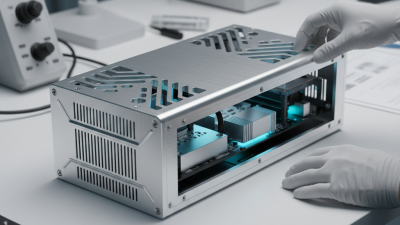
Protection and thermal management are central to the enclosure design. A rigid metal structure can resist impact, vibration, dust, and moisture, while ventilation channels, heat sinks, or controlled airflow help prevent excessive internal temperatures. The U.S. Department of Energy’s Alternative Fuels Data Center identifies temperature, weather exposure, and electrical safety as important considerations for charger deployment. Powder coating or anodizing can improve wear resistance, corrosion protection, and UV stability, helping the enclosure retain its appearance during outdoor service. Appropriate sealing and drainage details are also necessary where rain, snow, or roadside contaminants are present.

Installation flexibility allows the same housing concept to serve wall-mounted and floor-standing applications. Reinforced mounting points, level-adjustment features, and accessible terminals can shorten installation time and simplify inspection. Routine maintenance should include checking fasteners, seals, ventilation openings, cable entries, surface damage, and signs of corrosion, with cleaning and replacement performed according to the operating environment and electrical safety procedures.

FAQS

What types of metal chassis manufacturers are included in the ranking?

The ranking covers Chinese suppliers making steel or aluminum enclosures, welded frames, sheet-metal chassis, and machined housings.

Which companies are excluded from the ranking?

Firms focused only on trading or consumer accessories are excluded. Production capability must be visible.

How are the manufacturers evaluated?

Scores consider material control, machining accuracy, fabrication capacity, quality systems, delivery reliability, and engineering support.

What production details should buyers inspect?

Ask about laser cutting, bending, welding, surface treatment, and final inspection. Details matter more than polished claims.

What physical signs can reveal manufacturing quality?

Inspect a 1.5-millimeter steel panel, clean welds, protected corners, and even powder coating. Small flaws can signal larger problems.

Does the lowest price indicate the best supplier?

Not necessarily. Low pricing may hide poor flatness, weak threading, repeated revisions, or expensive rework.

How should buyers confirm lead times?

Ask when timing begins: purchase order, drawing approval, or tooling payment. Request separate dates for fabrication, finishing, inspection, and export preparation.

What should buyers check before paying for tooling?

Confirm ownership, maintenance charges, storage duration, and transfer conditions. Written terms prevent later confusion.

How should metal chassis be packaged for international shipment?

Sharp corners need edge protection. Painted panels need separators. Heavy frames may require reinforced cartons or pallets.

Are ranking results permanent?

No. Public information is uneven, and some production data cannot be independently verified. Recent samples, buyer feedback, and site audits still matter.

Conclusion

This guide presents a practical ranking framework for China’s top 10 Metal Chassis manufacturers serving global buyers. It explains how suppliers can be evaluated by material selection, chassis design, CNC machining capacity, dimensional tolerances, welding quality, surface finishing, production scale, and customization capability. Typical specifications include 0.8–3.0 mm steel construction, IP54–IP66 protection levels, and applicable NEMA enclosure ratings for demanding industrial environments.

The article also outlines essential quality and purchasing considerations, including ISO 9001 systems, RoHS and CE documentation, EMC testing, inspection records, and product traceability. Buyers will find guidance on comparing MOQ, lead time, tooling costs, packaging methods, export readiness, and compliance support. A final matching guide connects different manufacturing strengths with applications in telecom equipment, industrial automation, energy systems, and data centers, helping purchasers select reliable suppliers according to technical requirements, production volume, delivery expectations, and long-term project needs.
Clara

Clara

Clara is a dedicated marketing professional at Dongguan Changjian Electronics Co., Ltd. (New Website 2), where she leverages her extensive knowledge of the company's products to connect with clients and stakeholders effectively. With a strong passion for electronics and deep understanding of market......
Previous How to Choose an EV Charger Metal Enclosure in 2026?